Rejecting "Ingredient Mysticism": yarn-blending and material customization guide
Why 100% cotton socks lose elasticity, the three-layer material framework (skeleton, muscle, skin), and the recommended formula for balancing durability, comfort, and cost.
"100% cotton socks" is one of the most common marketing claims in the industry — and one of the most misleading. Pure cotton socks actually lose elasticity, sag after washing, and lack the abrasion resistance needed for commercial durability. The truth is: performance depends on fiber ratios, not single materials.
The three-layer material framework
At ANV Socks, we use a three-layer framework to design material blends:
- Skeleton layer (elasticity): Lycra or premium spandex provides structural stretch. Different specifications are used for different zones of the sock — higher denier for cuffs, lower for the body.
- Muscle layer (primary function): The dominant fiber — cotton, wool, bamboo, or synthetic — making up 65-85% of the blend. This determines the sock's feel, moisture behavior, and temperature regulation.
- Skin layer (durability): Nylon wrapping at high-wear areas (heel, toe) with bonding techniques that increase abrasion resistance 3x or more.
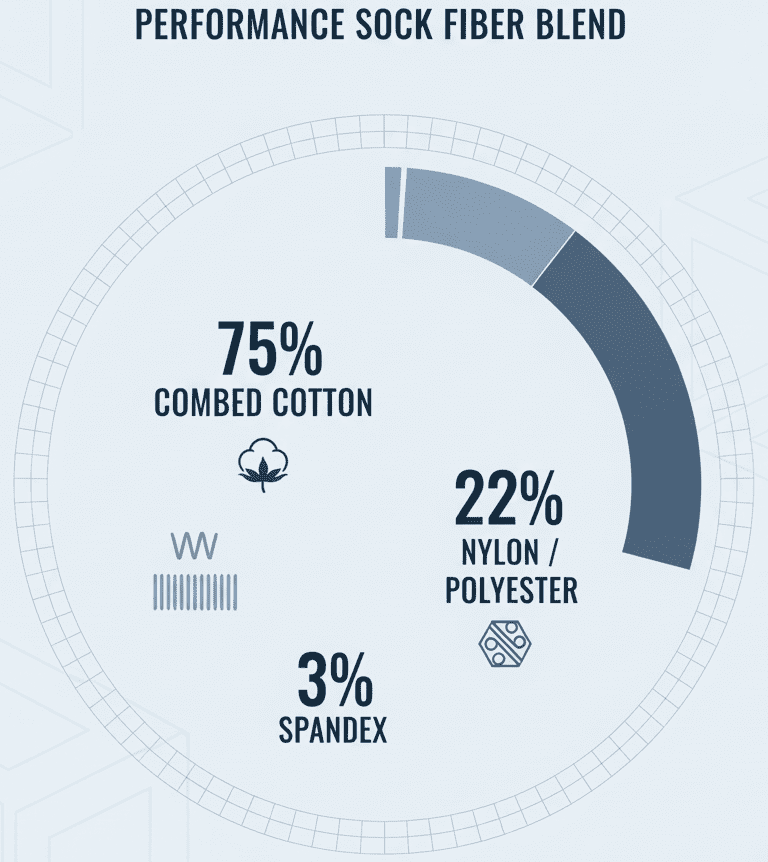
"75% combed cotton + 22% polyester/nylon + 3% spandex — balances comfort, durability, and cost for most commercial applications."
Why fiber ratios matter more than brand names
Cotton alone offers moisture absorption and softness but dries slowly, shrinks under heat, and lacks abrasion resistance. The three-fiber blend used in professional socks balances these trade-offs:
- Nylon/Polyamide: Tensile strength, pilling resistance, shape retention after repeated washing.
- Cotton: Moisture absorption and comfort. Higher cotton ratios feel better but reduce durability.
- Spandex/Elastane: Elasticity and shape recovery. Prevents sagging despite representing only 2-3% of the blend.
We adjust ratios based on the customer's priority: durability (higher nylon) vs. comfort (higher cotton). Both options meet commercial benchmarks — the choice affects how the sock feels, not whether it lasts.