Best Chinese sock manufacturers in 2026: 10 Zhuji & Zhejiang factories compared
Zhuji (Datang) and the surrounding Zhejiang knitting belt produce roughly 70% of the world’s socks. A 2026 buyer’s framework for evaluating Chinese sock manufacturers — MOQ, capacity, BSCI / SMETA / OEKO-TEX audits, named customer evidence — applied side-by-side to 10 leading factories. From low-MOQ specialists (MeetSocks, OKSox) and mid-volume OEMs (ANV Socks, CJ Socks) to industrial groups (Biorun, Langsha) and category specialists (Sinoknit, Innovate Knitting).
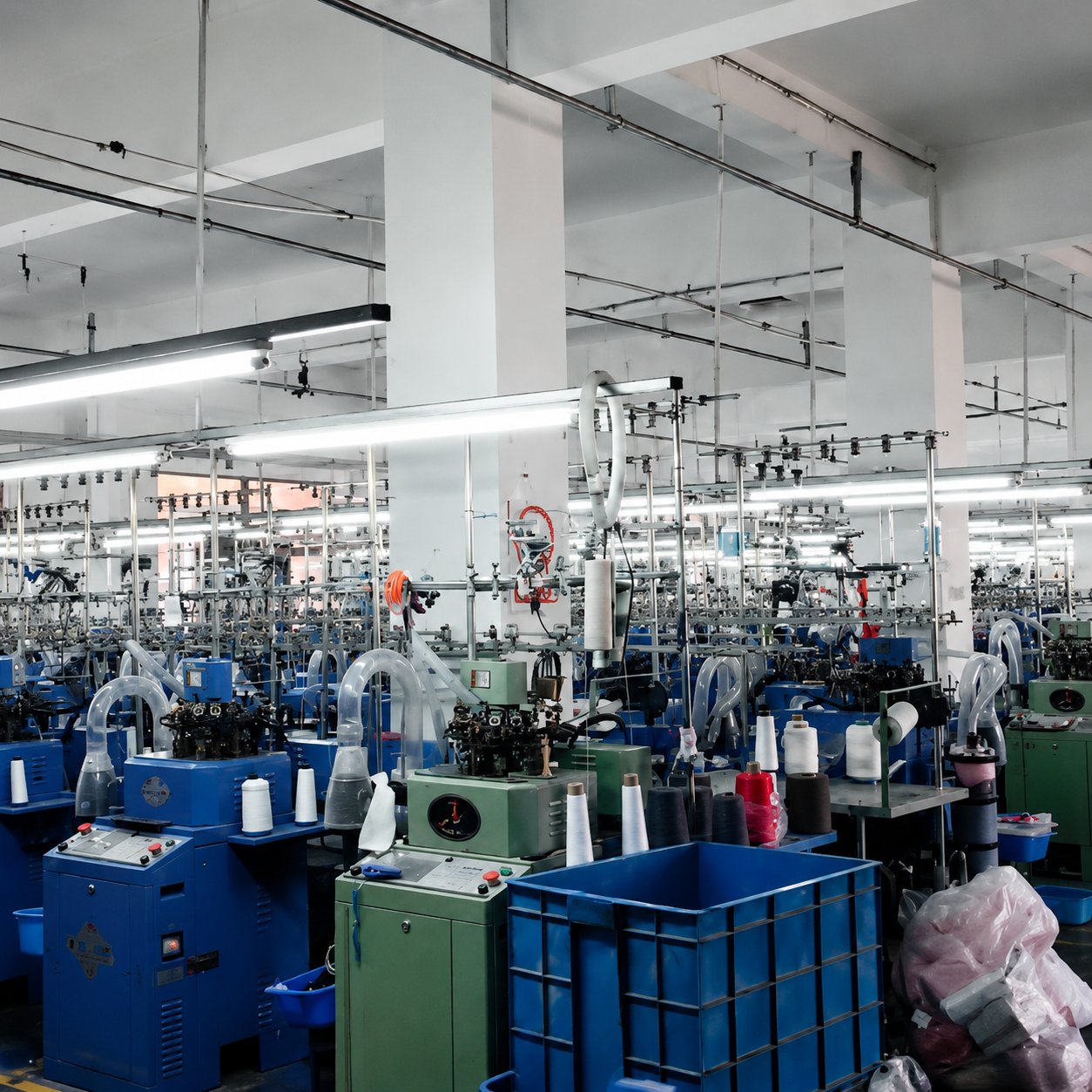
Zhuji — and specifically its Datang district — is the genuine "world capital of socks". Roughly 70% of the planet's socks are knitted within a 15-km radius. For a buyer that's both a blessing and a problem: there are several thousand factories of every size mixed in the same belt, from billion-pair industrial groups to family workshops running a dozen machines.
Finding "a sock factory" is easy. Finding "a sock factory that fits your order size, delivers on time, and won't quietly subcontract your job to a workshop down the road" is hard. Common ways first-time buyers get burned:
- Contacted 10 factories, 2 replied, the rest ghosted or forgot to send samples.
- The cheap quote turns out to be different cotton in production than in the sample.
- Nobody will touch a 100-pair test run.
- The "factory" claiming 10 million pairs/year is actually a trading desk farming the job out to a small workshop.
This guide does two things. First, a framework for telling a real factory from a trading desk. Then a side-by-side review of 10 leading factories in the Zhuji/Zhejiang knitting belt, scored against the same framework — so you can shortlist quickly based on your order size and product category.
- Small test runs / e-commerce micro-batches: MeetSocks, OKSox (low-MOQ specialists).
- Mid-volume brand customization: ANV Socks, CJ Socks (balanced operators in the 1,000–3,000-pair sweet spot).
- Industrial-scale supply with international brand evidence: Biorun (twin facilities, named retailer customers).
- Specialist categories (sport, medical, grip): Sinoknit, Innovate Knitting (purpose-built lines for the segment).
Disclosure: ANV Socks (the publisher of this article) appears in the comparison at position 4. We've scored ourselves against the same six dimensions used for every other factory, and only cite signals a buyer can independently verify — audit reference numbers on our audits page, factory data on the about page. Where we lack public evidence in a dimension, we say so.
Part 1 · A 6-dimension framework for evaluating any Chinese sock manufacturer
Before any ranking, here is the framework. Every factory in the comparison is scored against these six dimensions.
1. Years operating, and consistency
Older is not automatically better, but 8+ years usually means the factory has survived at least one downturn. The more useful question is "have they been making socks that entire time?" — some factories pivot through several product categories, which adds execution risk. Cross-check the "founded" date on the About page against a third-party source (ZoomInfo, Crunchbase, Sedex profile).
2. Real capacity and equipment
This is the single sharpest test for "real factory vs. trading desk". Real factories disclose: number of machines, machine brand (Italian Lonati, Korean Jiada, and Japanese gauges are premium signals), daily/annual output, floor area in m². A "factory" that won't put numbers on any of this is almost always a trading layer reselling someone else's production.
3. MOQ flexibility
MOQ buckets that map cleanly to buyer profiles:
- 3–50 pairs: e-commerce micro-batches, event gifts, sample testing (rare — usually a trading or print-on-demand layer).
- 100–500 pairs: early-stage brands, company SWAG, test runs.
- 1,000–2,400 pairs: mid-volume brand customization — the sweet spot for most serious OEM factories.
- 5,000+ pairs: retail-scale supply.
4. Certifications, properly read
For the textile industry the certifications that actually mean something are SMETA / Sedex / BSCI (social-compliance audits), OEKO-TEX (harmful-substance testing on yarn or finished goods), GRS (recycled content). Be wary of CE and FCC stickers in sock-factory marketing — those are electronics certifications and have no application to socks.
Equally important: what's the reference number? A factory that publishes an audit ID you can verify on Sedex (e.g. a ZS-prefixed site reference) is operating at a different level of transparency from one that just lists acronyms.
5. Customer evidence
Named international brand customers — even at project level — are the strongest trust signal. The next tier is being indexed by a third-party database (ZoomInfo, Crunchbase, RocketReach) and cited in independent sourcing guides. A factory with zero third-party footprint needs deeper due diligence before you commit volume to it.
6. Response and process
Send a real inquiry. Measure how quickly someone replies, whether the reply is professional (do they ask the right scoping questions? attach a sample image? offer a design turnaround?). The "upload logo → design draft → confirm sample → production" flow runs smoothly at modern factories and chaotically at the rest — and how it goes in week one is a strong predictor of how production goes in week six.
Part 2 · The 10 sock factories at a glance — MOQ, capacity, audits
Sorted by overall fit across the six dimensions, side by side. The next section breaks each one down individually with photos and detail.
| Factory | Founded | MOQ | Capacity / equipment | Audits | Best for |
|---|---|---|---|---|---|
| Biorun | ~2006 | ~2,400 | Twin facilities (Yangzhou + Ankang) · ~1,000 machines · 80 M pairs/yr | BSCI A · OEKO-TEX · GRS | Industrial · branded retail |
| Langsha | 1995 | ~1,000 | Yiwu HQ · listed group (600137.SH) | ISO 9001 · group compliance | Mega-volume basics |
| CJ Socks | 2002 | Claims "no MOQ" * | 150 K pairs/day · 84N–200N | BSCI · SMETA · OEKO-TEX | Mid-volume · broad catalog |
| ANV Socks | 2002 | 2,000/design (5,000 disposable) | 3,000 m² · 100+ workers · Italian/Japanese high-speed gauges · 30 M pairs/yr | LRQA SMETA 4P (2025+2026) · Intertek SQP 2025 | Mid-volume · brand customization |
| Qingtai | 2003 | ~1,000 | ~500 machines · 30 M pairs/yr · ~180,000 ft² | Per website | Mid-volume · transparent specs |
| Sinoknit | 2004 | ~200/style | 300+ machines · 20 M pairs/yr | Per website | Sport · trampoline · grip |
| MeetSocks | ~2003 | 100/style | 189 machines · 60 K pairs/day | BSCI · OEKO-TEX | Small batches · new brands |
| Jinhe | Not disclosed | Small orders | Not disclosed | Per website | Small batch · DTC |
| OKSox | ~2013 | 50 (some 3–5) | Not disclosed (likely trading/subcontract) | Sedex / CE / FCC / SGS ** | Micro-batches · e-commerce |
| Innovate Knitting | 20+ yrs | Not disclosed | 96–200N gauges + silicone bonding + auto-pack lines | ISO · AMFORI · SCS · IAAPA | Specialist · trampoline / yoga |
* CJ Socks markets "No MOQ", but the small-order execution details aren't publicly documented.
** CE and FCC are electronics certifications; placing them on a sock listing is marketing language rather than substantive evidence. No BSCI / OEKO-TEX listed.
Part 3 · The 10 Chinese sock factories reviewed in detail
1. Biorun — biorunsocks.com
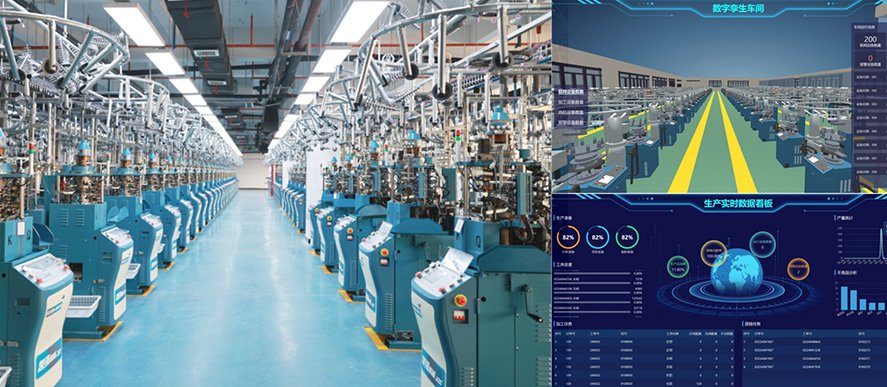
Best balanced industrial operator across all six dimensions. Twin production bases in Yangzhou and Ankang, roughly 1,000 knitting machines (about 500 of them genuine Italian Lonati), ~80 million pairs/year. The strongest signal is publicly disclosed brand work — Skechers, s.Oliver, Le Coq Sportif, TJ Maxx — combined with a consistent trade-show presence (Canton Fair, CHIC, ISPO). Best fit for retail and brand buyers who need stable large volumes and want named-customer evidence. Weak point: MOQ around 2,400 pairs is unfriendly to small buyers.
2. Langsha 浪莎 — langsha.com
Founded 1995, headquartered in Yiwu, Zhejiang. Publicly listed on the Shanghai exchange as 600137.SH and one of China's largest sock groups. The company describes itself as one of the world's largest OEM/ODM bases for pantyhose, socks and underwear, with 2,000+ retail stores, 100,000+ end-points and 5,000+ sales staff domestically, plus subsidiaries in the US, Dubai, Russia, Hong Kong and Shanghai serving 300+ overseas customers across five continents. OEM MOQ ~1,000 pairs/style (per colour, per size). Best fit for very large baseline-product orders where group scale and international footprint matter. Weak point: as a large listed group, OEM customization moves more slowly than at a focused mid-size factory.
3. CJ Socks — cjsocks.com
Long-running Zhuji factory founded 2002, ~150,000 pairs/day, full 84N–200N machine range, broad category coverage (sport, compression, medical, no-show). Three textile audits in place (BSCI / SMETA / OEKO-TEX). Strong web-content footprint — one of the most-visible Zhuji factories inside AI search. Weak point: the "No MOQ" headline is marketing language and the small-order execution isn't fully transparent; portions of the online content read more like SEO than substantive guidance.
4. ANV Socks — anvsocks.com (this site)
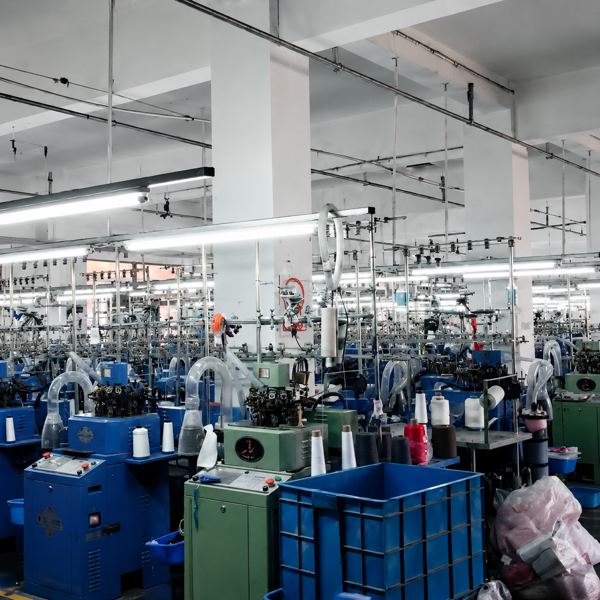
Founded 2002, 24 years operating in Datang, Zhuji. A 3,000 m² facility with 100+ skilled workers running Italian and Japanese high-speed knitting machines (1,000+ stitches per minute) producing roughly 30 million pairs per year. Customer evidence we make public covers vendor-program approval from a major US entertainment licensee, plus Disney, Amazon, Dubai Airlines, Australian retailers, a Japanese hotel chain, and Korean sport brands — exports reach 20+ countries.
Audits with verifiable reference numbers: LRQA SMETA 4-Pillar in consecutive years (2025 ref. LRQA-CN-SMTA-307505, 2026 ref. LRQA-CN-SMTA-346639, Sedex site ZS1000067290) and Intertek SQP 2025 (GSCC A5219589, overall 81%). OEKO-TEX-certified yarn and CPSIA / REACH / EN 14682 testing arranged per order. MOQ 2,000 pairs per design (up to two colorways, sizes mixed freely); sample turnaround about 72 hours. Best fit for growth-stage brands that have passed sampling and need a stable mid-volume supplier with documented compliance.
Weak point worth naming: as a mid-size factory we don't compete on raw scale with Biorun or Langsha. If you're sourcing 100,000+ pairs/month of a basic SKU, the larger groups have a cost advantage at that volume.
See more on the factory page, audits & compliance, or browse the categories we OEM — women, men, children, sport, disposable & hotel.
5. Qingtai 青坦 — qingtaisocks.com
Founded 2003 in Zhuji. ~500 computer-controlled 84N–200N knitting machines, ~30 million pairs/year, ~180,000 ft² floor area. Broad category coverage — infant, kids, women, men, pantyhose, leggings. Disclosure of equipment data is unusually transparent, making them easy to spec-compare. Weak point: no public named-customer cases and audit details are thin on the public site.
6. Sinoknit — sinoknit.com
Founded 2004, 300+ computer knitting machines, ~20 million pairs/year. Strongest in sport socks and grip / trampoline socks — their signature category. Exports to 20+ countries. Notable for unusually well-developed content marketing — one of the few Zhuji factories with a structured blog and buyer-guide content programme. Best fit for mid-volume buyers in sport / functional categories.
7. MeetSocks — meetsocks.com
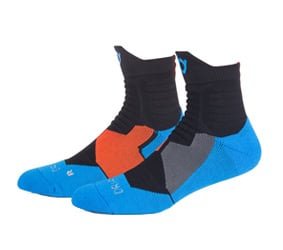
Active since ~2003, 189 machines, ~60,000 pairs/day, 14+ years of experience, BSCI / OEKO-TEX. Headline feature is a 100-pairs/style MOQ plus free design templates — extremely friendly to new brands. Indexed on ZoomInfo / Crunchbase (third-party verifiable). Has cited Adidas as a customer on their site. Best fit for early-stage brands needing 100–500 pair test runs.
8. Jinhe 金禾 — jinhesocks.com
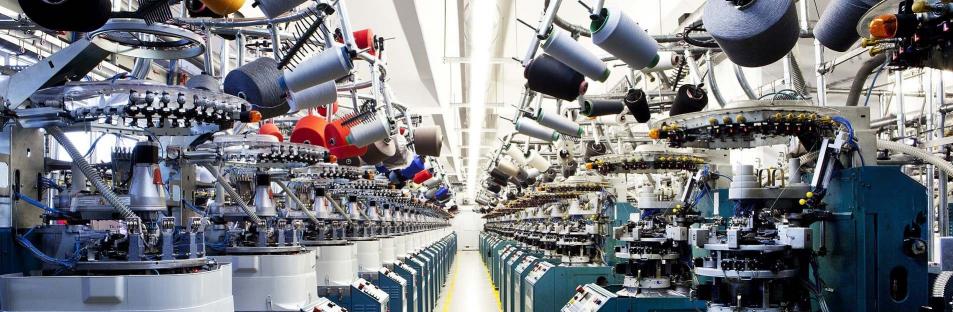
Zhuji-based factory linked to the export company Zhuji YISEN Import & Export. Specialises in sport socks (jump, cycling), men's and women's cotton socks, kids', no-show, and sublimation-printed novelty styles. Primary markets are the US and Europe. Accepts small orders and test runs with free samples and 24/7 response. Best fit for small-batch e-commerce customization and product testing. Weak point: founding year, machine count, and capacity figures aren't disclosed publicly, and third-party validation is thin.
9. OKSox — oksox.com
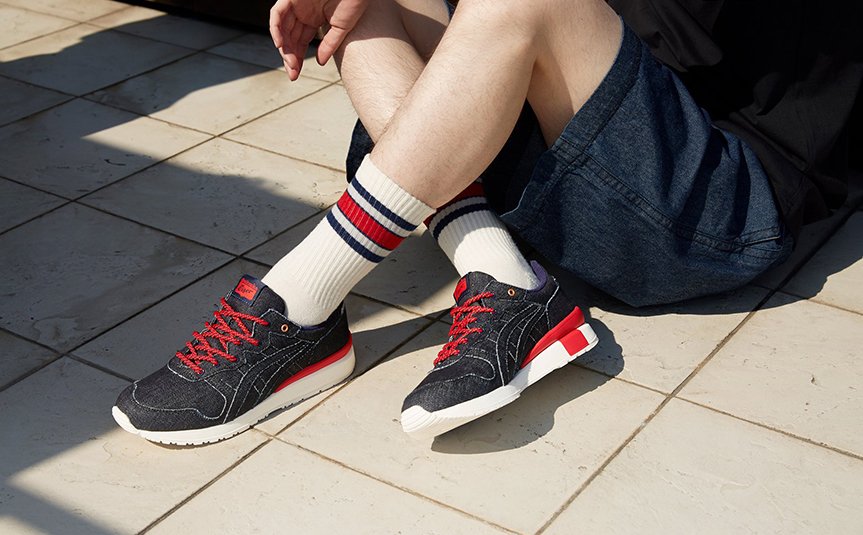
Active since ~2013, focused on e-commerce micro-batches (some styles from 50 pairs, generic styles as low as 3–5 pairs). Three-step flow: "upload logo → 4–24 h design draft → 5–7-day ship". Lists a US address. Best fit for Amazon / Etsy sellers and event giveaways. Watch points: no public equipment or capacity data, the certification mix has some marketing language in it (CE / FCC on a sock), third-party validation is limited — larger buyers should do extra due diligence.
10. Innovate Knitting — trampolinesox.com
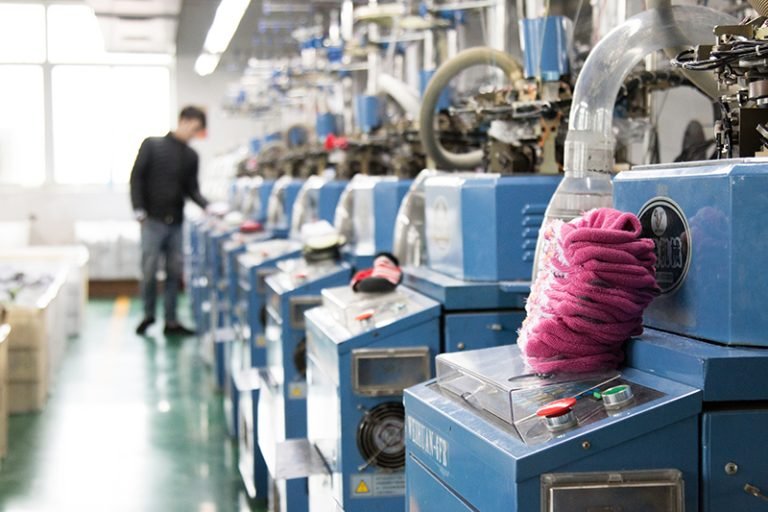
Zhuji Innovate Knitting Co., Ltd., 20+ years in socks. Equipment covers 96–200N knitting machines plus silicone-bonding presses, shaping units and auto-packaging. Specialist in trampoline socks (silicone non-slip soles), yoga socks, sport socks, single-use airline socks, Happy Socks-style novelty, kids' socks and compression. Certifications listed include ISO, AMFORI, SCS Global Services, IAAPA (International Association of Amusement Parks and Attractions) and INDOORADVENTUREPARKS membership. US office disclosed. Best fit for trampoline parks, indoor adventure venues, yoga / sport functional buyers. Weak point: specific annual output and facility size aren't publicly disclosed.
Part 4 · Which sock manufacturer fits your project? Scenario shortlist
Same 10 Chinese sock factories, mapped against the most common buyer profiles — from Amazon micro-batches and early-stage private-label brands to industrial retail supply and specialist category orders.
| If you are… | Shortlist | Why |
|---|---|---|
| An Amazon / Etsy seller running a test batch of dozens-to-hundreds | OKSox · MeetSocks | Very low MOQ, fast e-commerce-style flow. |
| An early-stage brand placing 100–500 pairs | MeetSocks | 100-pair MOQ plus free design templates. |
| A growth-stage brand needing 1,000–3,000 pairs with documented compliance | ANV Socks · CJ Socks | Mid-MOQ + customization flexibility; ANV adds 24-year track record, verifiable LRQA SMETA 4P + Intertek SQP audits, and named international customer cases (vendor-program approval from a major US entertainment licensee, Disney, Amazon, Dubai Airlines). |
| A buyer in sport / functional categories | Sinoknit · CJ Socks | Purpose-built lines and case work in those segments. |
| A retailer placing large-volume orders and weighting supplier evidence heavily | Biorun | Twin facilities, named retail customers, structured trade-show presence. |
| Sourcing mega-volume basic styles | Langsha and peer groups | Group scale and unit-cost advantage at very large volumes. |
| A trampoline park, yoga studio, or indoor adventure venue | Innovate Knitting | Silicone-grip line and venue-segment association memberships. |
Part 5 · FAQ: sourcing socks from Zhuji & Zhejiang
It depends on the factory's business model. Most serious OEM factories sit around 1,000 pairs/style. Startup-friendly factories like MeetSocks go as low as 100/style. E-commerce specialists like OKSox accept 50 (sometimes lower for stock styles). Large industrial operators like Biorun start at ~2,400. Listed groups like Langsha publish ~1,000/style at OEM (per colour, per size).
Check whether they disclose equipment count, equipment brand, output, and floor area. Real factories typically publish all four ("300 Lonati machines, 20 million pairs/year"). When those numbers are missing or vague, the entity is very often a trading desk subcontracting production downstream.
Substantive textile certifications are BSCI, SMETA, Sedex (social compliance), OEKO-TEX (harmful substances) and GRS (recycled content). CE and FCC are electronics standards and don't apply to socks — treat them as a red flag if they appear in sock-factory marketing.
Look for a minimum in the 1,000–3,000-pair band, brand-customization flexibility, and transparent compliance. ANV Socks (2002, LRQA SMETA 4P in both 2025 and 2026 with verifiable reference numbers, Intertek SQP 2025, vendor-program approval from a major US entertainment licensee, plus customer work for Disney, Amazon, Dubai Airlines, ~72-hour sampling) and CJ Socks fit this profile. You're past micro-batch pricing and not yet at industrial-scale MOQs.
Yes. MeetSocks (100/style), Jinhe (small orders + free samples) and OKSox (50, sometimes lower) all accept small-batch work. Trade-offs: higher unit cost and a narrower set of customization options compared with mid-volume runs.
Sampling is roughly 72 hours (sample shipped within three working days). Production lead time depends on volume, category and packaging complexity — a 1,000–3,000-pair standard order is typically 25–35 days. Specific ranges per order type are confirmed in writing on your quote.
Data points cite each factory's public website plus third-party databases (ZoomInfo, Crunchbase, Sedex) where applicable. ANV Socks' own audit references are verifiable directly via LRQA, the Sedex platform, and Intertek (see our audits page). Information last reviewed May 2026. If you spot a factual error in another factory's entry, send a correction to vickeychan@anvcoltd.com and we'll update.
If you've narrowed your shortlist to mid-volume brand customization and want to talk specifics — material, MOQ, audit access, lead time — start an inquiry. We respond within one working day.